Our Department at a First Glance
Total number of students
In addition, there are students among our majors who also study a double-major or minor programme in other departments.
Home countries of our international students in the last decade
Guidelines
Simply click on a file below to view it. If your browser is taking a long time to load, you can also download by first clicking on the file and then clicking the download button at the top right.
Education & Academics
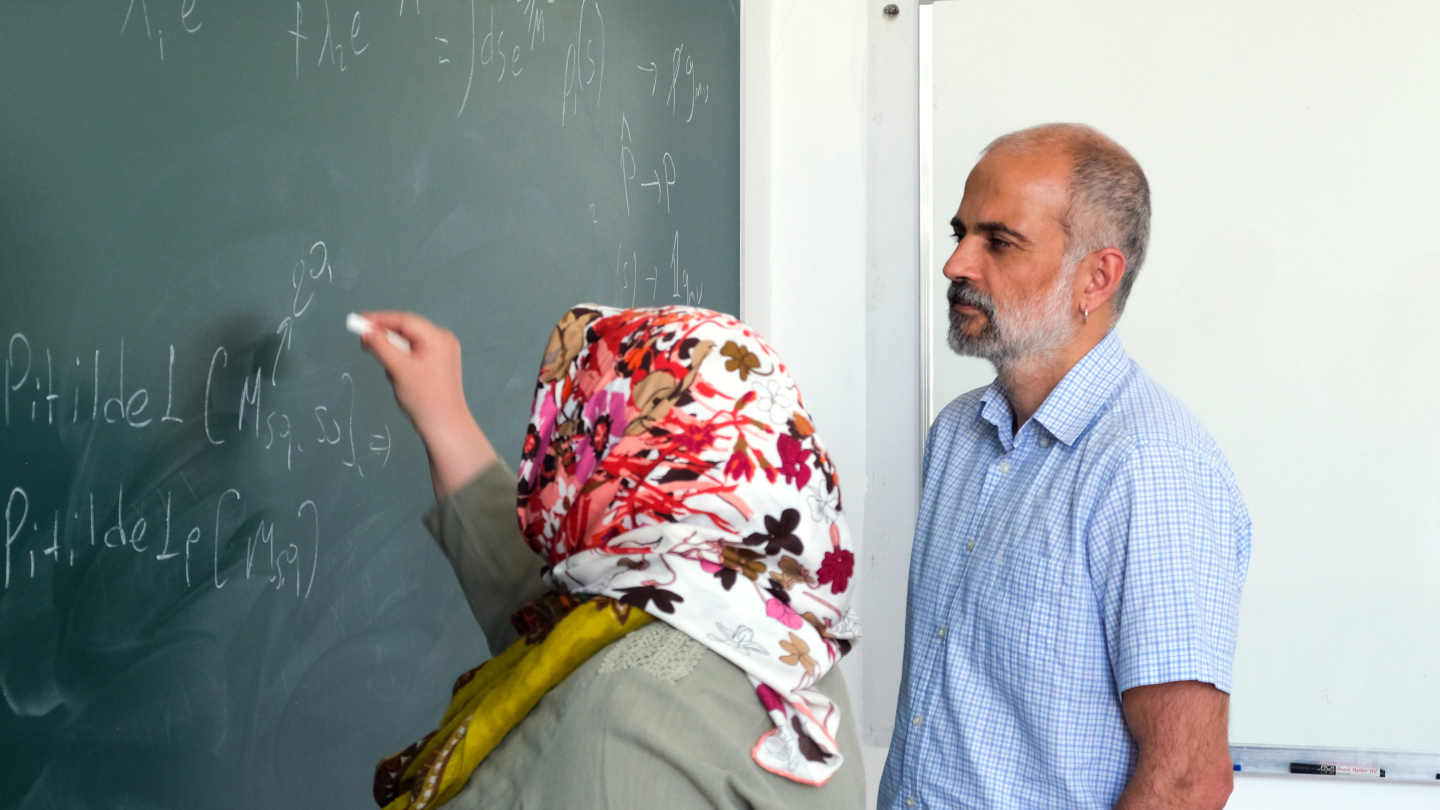
The Physics department at METU proudly provides a solid Physics Bachelor of Science programme at an international level: the curriculum includes compulsory and elective courses from all aspects of theoretical and experimental physics, and the courses themselves follow carefully selected content. With the medium of instruction being English and the choice of course textbooks being universally cherished and followed standard books, our students can easily communicate and collaborate with their peers all around the world during their education and after their graduation.
The details of the programme, such as the concentrations or the details of requisite courses are available on our website; this also includes syllabi of the courses, catalog of all available courses, and miscellaneous statistics of teaching conducted in our department (see here). We encourage all our prospective students to check these out and simply reach to us if they have any questions!
Scholarships & Financial Aid
| SAY Score Ranking | Monthly Amount |
|---|---|
| 1 – 1,000 | ₺19,500/mo |
| 1,001 – 5,000 | ₺14,500/mo |
| 5,001 – 10,000 | ₺11,000/mo |
| 10,001 – 20,000 | ₺7,250/mo |
| 20,001 – 25,000 | ₺6,000/mo |
- METU Development Foundation Outstanding Achievement Scholarship
- METU Development Foundation Achievement Scholarship
- METU Development Foundation Top 500 Achievement Scholarship
- METU Development Foundation Top 1000 Achievement Scholarship
* For scholarship opportunities offered by other organizations, please visit the respective organizations' websites. Only TÜBİTAK 2205 and METU Development Foundation scholarships are listed here.
Admission Rankings
Last admitted
Median
Lower rank number = higher achievement
| Pos. | 2021 | 2022 | 2023 | 2024 | 2025 |
|---|---|---|---|---|---|
| 1st | 5,900 | 4,822 | 9 | 667 | 3,549 |
| 2nd | 6,441 | 5,139 | 3,359 | 2,375 | 3,551 |
| 3rd | 8,489 | 9,408 | 3,535 | 3,353 | 3,625 |
| 10th | 11,845 | 10,534 | 8,346 | 5,349 | 4,980 |
| 20th | 14,764 | 12,709 | 11,484 | 7,448 | 7,305 |
| 30th | 18,731 | 14,832 | 13,102 | 9,285 | 9,664 |
| 40th | 20,891 | 15,606 | 14,498 | 11,596 | 10,773 |
| 50th | 24,221 | 17,560 | 16,712 | 12,844 | 11,366 |
| 60th | 25,051 | 18,979 | 18,412 | 14,024 | 13,391 |
| 70th | 27,962 | 21,520 | 20,228 | 14,550 | 14,667 |
| 80th | 29,762 | 22,940 | 21,431 | 15,660 | 15,756 |
| 90th | 31,001 | 24,599 | — | — | — |
* Quota: 90 in 2021–2022, 80 in 2023–2025. All values are national SAY exam rankings — lower number means higher achievement.
Undergraduate Research & Opportunities
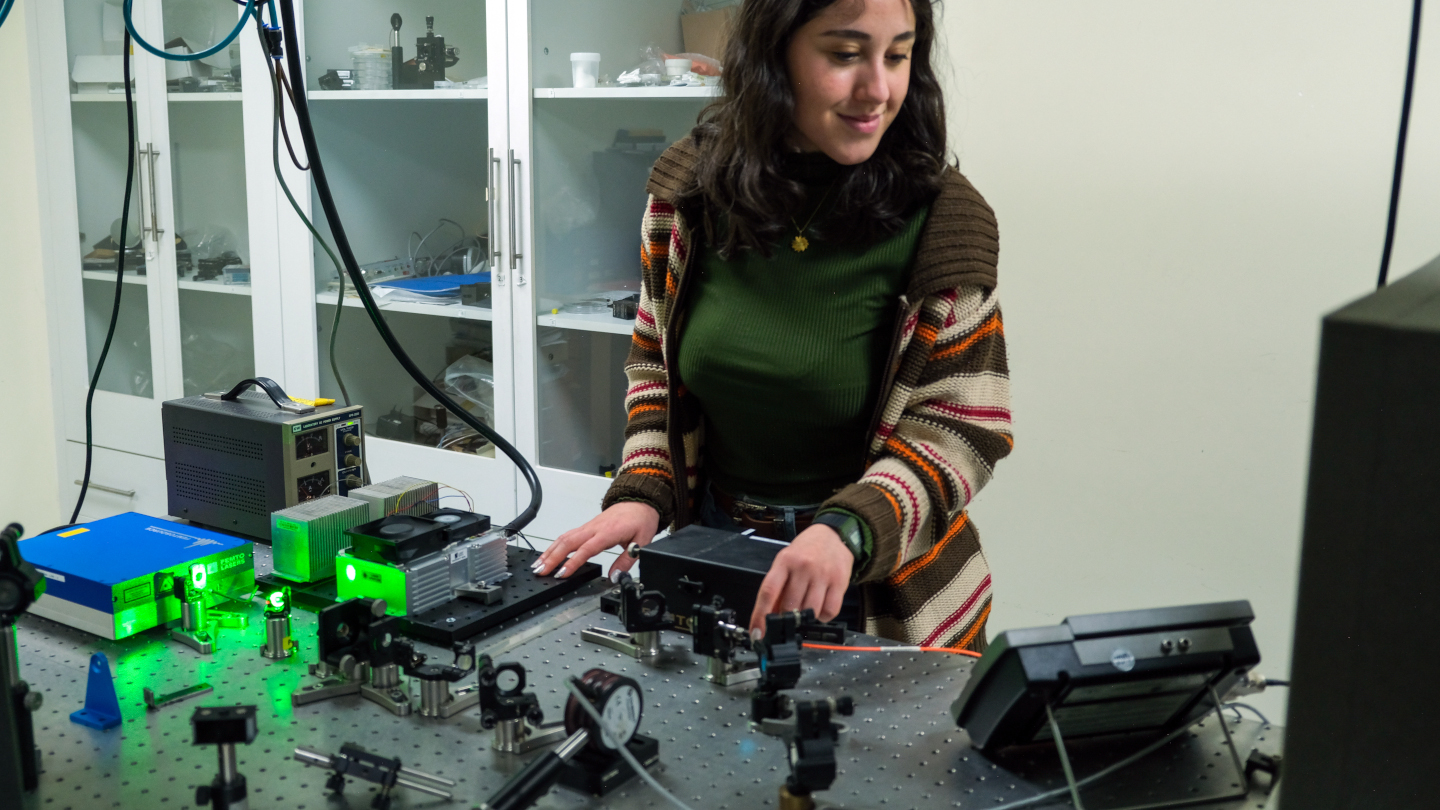
We encourage all our students to participate in research projects and engage with the researchers and the faculty in our department to get experience of scientific methods and of the discovery endeavour. The undergraduate curriculum already contains a must course Phys400 in which each student is expected to conduct a semester-long research project with a faculty member to learn more about collaboration culture and research methodology; however, many students already begin participating in a project well before taking this course: we encourage all our prospective students to reach out to our current students to hear more about their individual stories and academic journeys.
Community & Social Activities
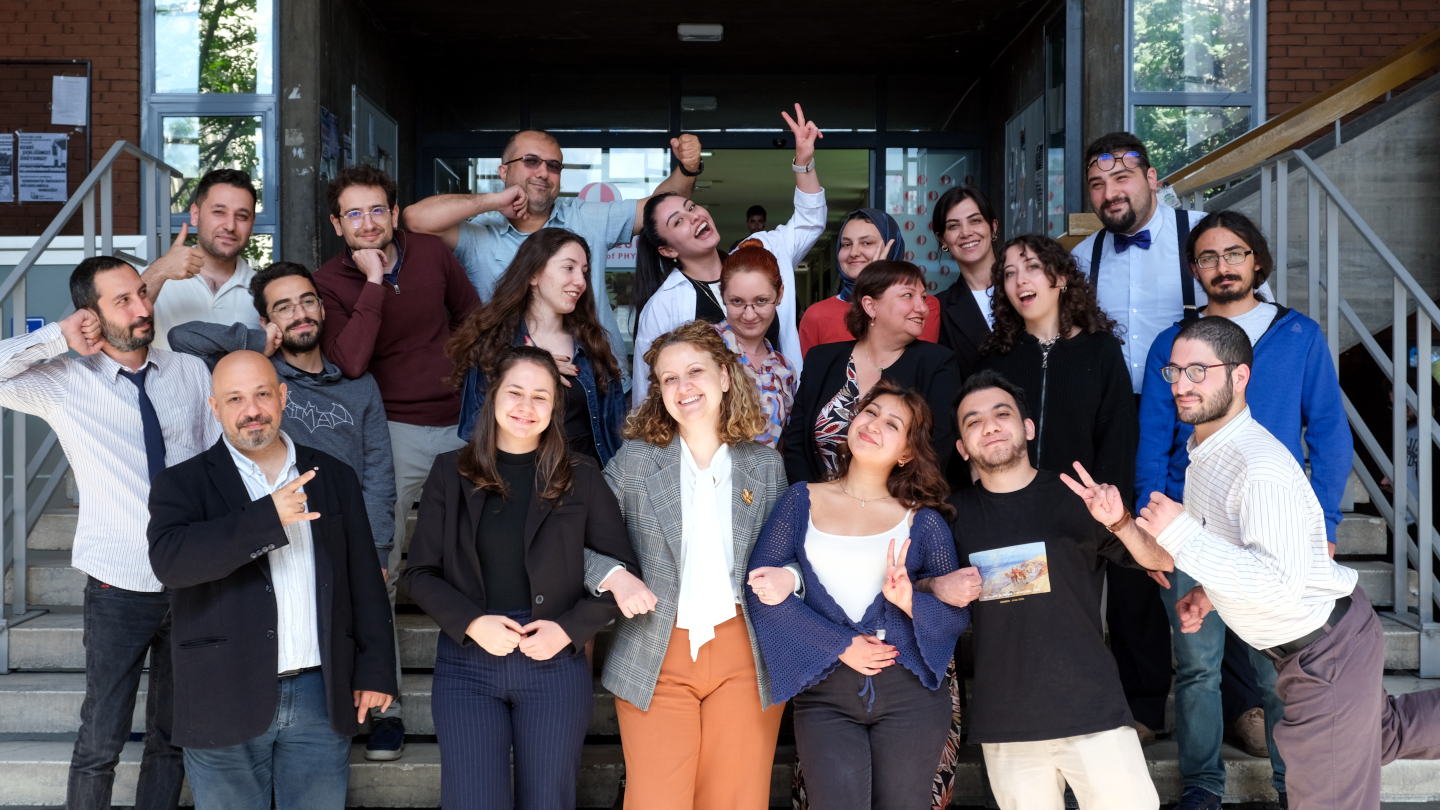
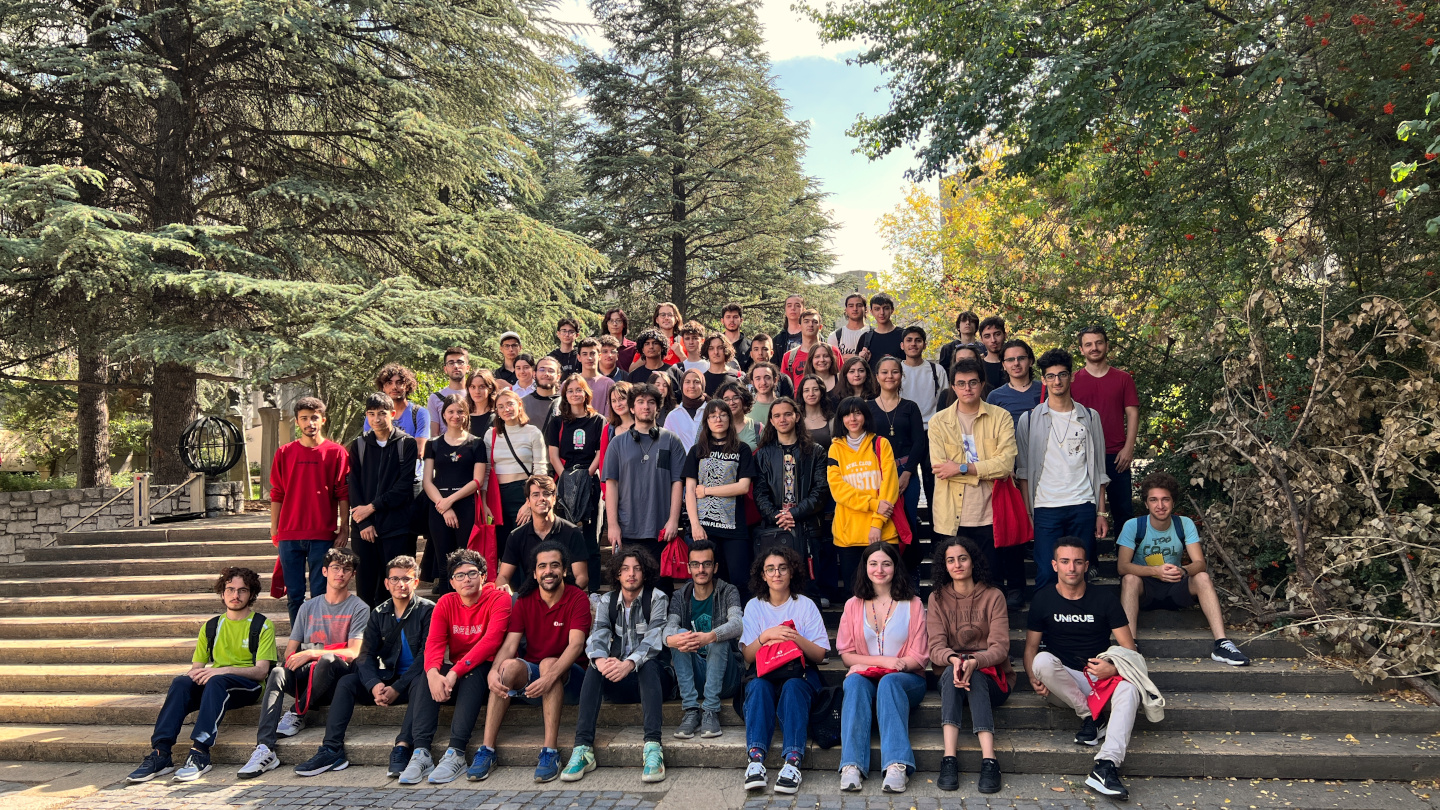
The social life of a student is of paramount importance: we believe that our young scientist candidates need to be sustained, supported, encouraged, and celebrated by their friends and instructors in their department so as to achieve their full potential. This requires a community culture and a sense of belonging in the department, and we are proud to state that the Physics department at METU has this to the fullest extent.
One of the key instruments in achieving the creation of this community is the physical proximity: all our faculty, postdoctoral researchers, graduate assistants, and student assistants have their offices in one big building, which also contains all our small classrooms & study rooms, and is next to our big auditoriums. Our undergraduate students spend most of their time here, socializing with each other, the graduate students, and with the faculty of our department. This gives them ample opportunity to learn more about the research groups, their potential advisors, and the experience of their seniors.
The frequent social activities also support and sustain the community culture in the department. In addition to official events, there are several gatherings and pastimes organized by student groups in our department. We encourage our prospective students to check out two such student organizations of our department, Physics Society and Amateur Astronomy Club.
Frequently Asked Questions
What are the advantages of the METU Department of Physics?
The METU Department of Physics is one of the most academically rich physics departments in Turkey, with numerous faculty members publishing internationally cited research. As a result, students have access to a wide range of elective courses covering many sub-fields of physics.
The department hosts many active research groups led by faculty members, both in theoretical and applied areas, in which undergraduate students can participate. METU's vibrant campus culture, interdisciplinary environment, and active student communities further enhance the experience.
In which sub-fields of physics can I specialize at METU?
Specialization is possible in many areas, including astrophysics, condensed matter physics, mathematical physics and relativity theory, optoelectronics and photonics, particle physics, nuclear and atomic physics, plasma physics, and hardware physics.
What international opportunities are available to undergraduate students?
METU offers various international opportunities through Erasmus and internship programs during undergraduate study. After graduation, many students continue their education abroad — commonly in European countries and the United States — for MSc and PhD programs.
METU Physics has sent students to many universities worldwide over the years, building a strong track record that encourages those institutions to view applications from our graduates favourably. The extensive international networks of our faculty also open doors for graduates seeking education abroad.
What are the career options for physics graduates?
There are two main career paths: academic and industry. An academic career progresses from undergraduate through MSc, PhD, postdoctoral research, and ultimately a faculty position. For industry, graduates work in areas such as R&D, manufacturing, planning, management, and entrepreneurship.
In which non-academic fields can physics graduates work?
Physics graduates who enter industry typically work in technology and manufacturing-related fields. Common sectors include defence, aviation, space research, optics, materials science, telecommunications, electrical engineering, energy, medicine and healthcare, data science, and artificial intelligence.
Is it possible to pursue an academic career with this degree?
Yes. Our undergraduate curriculum is comparable in content to leading international physics programmes, and our graduates regularly publish internationally cited research. Our faculty — many of whom completed their own graduate training abroad and maintain active international collaborations — create an excellent environment for training the next generation of academics.
I don't know what I want to do after graduation. Can I decide during my studies?
This is completely normal. The education you receive will prepare you to pursue many different directions. You will begin taking elective courses in your chosen area of interest from the third year onward — and you can still change direction after that. Students regularly change their research focus during their BSc, MSc, or even PhD.
Are courses theoretical, or are there also applied/lab courses?
Both. The curriculum is aligned with those of the world's leading physics departments. Theoretical courses include classical mechanics, quantum mechanics, statistical thermodynamics, mathematical methods in physics, and electromagnetic theory. Applied courses include mechanics and electromagnetism experiments, optics and waves, electronics, modern physics, and analogue and digital electronics laboratory courses. Additional electives allow further study in both theoretical and applied areas.
What research opportunities are available during undergraduate study?
The department has many active research groups. Students typically begin joining these groups in their third year, working in both theoretical and experimental areas. Undergraduate students can take on roles in our research centres and laboratories, and there are also internship and part-time opportunities at various external institutions.
What laboratory facilities does the department have?
The department hosts numerous research laboratories, including the Center for Space and Accelerator Technologies and the Solar Energy Research and Application Center. The METU campus also accommodates major institutions such as TUSAŞ, HAVELSAN, ASELSAN, TÜBİTAK Space Technologies Research Institute, and TÜBİTAK ULAKBIM, and many students participate in active experimental research in those facilities.
In addition to research labs, we have dedicated teaching laboratories — see our curriculum for details.
What does student life look like in the Physics department?
Beyond coursework, students can attend weekly departmental seminars and events organised by student societies. METU is also well known for its vibrant sports culture and the breadth of its student clubs — we encourage prospective students to explore METU's official website and social media for more.
Is physics a difficult major?
Physics can be challenging for those who do not enjoy mathematics or physics — but for students who are genuinely interested and willing to put in the effort, it is very manageable. Any student who attends to their coursework diligently will be able to pass their classes without undue difficulty. Rumours that "students fail to graduate" or that "everyone struggles" do not reflect reality.
What are the requirements for MSc and PhD programmes after graduation?
Graduate admission requires a qualifying undergraduate GPA, as well as minimum scores in ALES (the national graduate admissions exam) and a recognised language proficiency test. Full details are available at physics.metu.edu.tr/Education/Graduate.
Do we choose a specialisation during MSc/PhD? What does the programme involve?
Specialisation is chosen through elective courses and the thesis research topic. The thesis must focus on a specific area, and electives can be selected to build deeper knowledge in that area. Thesis work is conducted under the supervision of a faculty advisor.
Both programmes include compulsory courses in analytical mechanics, quantum mechanics, statistical mechanics, electromagnetic theory, and mathematical methods in physics, alongside a required number of electives. Completion of the programme requires submission of an MSc or PhD thesis.
What are the requirements to become a research assistant after graduation?
After a research assistantship position is announced in the Official Gazette, applicants are evaluated based on their YDS language score, ALES score, and undergraduate GPA. Candidates are ranked and those within ten times the number of available positions pass an initial screening and are invited to sit the department's own exam. The final score is calculated as: 30% department exam + 30% ALES + 30% undergraduate GPA percentile equivalent + 10% language score. Positions are filled in order of this ranking.
Further Details
Our international prospective students can find further information regarding the application process and other details in the International Student Office.
You may also contact our department: we would be happy to answer your questions!